How Long Distance Bracelets Help Couples Stay Emotionally Connected
Long-distance relationships are no longer rare. People move for college, careers, family responsibilities, travel, and personal goals. Many couples love each other deeply, but distance can still make daily connection feel harder. Messages are helpful. Video calls are important. But sometimes, a relationship needs something more emotional than words on a screen.
That is where technology and romance are beginning to meet in a new way. Modern couples are looking for simple, meaningful tools that help them feel close even when they are physically apart. One of the most popular examples is long distance bracelets, a new kind of wearable jewelry designed to turn touch into an instant emotional signal.
Instead of being just another gadget, these bracelets create a small ritual between two people. A tap, a light, or a vibration can say, “I miss you,” “I’m thinking of you,” or “I’m here with you,” even when time zones, busy schedules, or thousands of miles stand in the way.
Post Content
Why Long-Distance Relationships Need More Than Text Messages
Texting is convenient, but it does not always carry emotion well. A short message can feel cold. A delayed reply can create anxiety. A missed call can lead to overthinking. In long-distance relationships, small gaps in communication can sometimes feel much bigger than they really are.
Healthy long-distance love depends on emotional reassurance. Couples need to know that the relationship is still active, warm, and present in daily life. This does not mean talking every minute. In fact, many strong couples do not have unlimited time for long conversations every day. What matters is consistency, trust, and small emotional signals that remind each person they are still connected.
This is why physical symbols matter. A ring, necklace, hoodie, photo, or handwritten note can carry emotional meaning. Long distance bracelets take that same idea and add real-time interaction. They are not only worn as jewelry; they become a private communication channel between two people.
The Emotional Power of a Simple Touch
Touch is one of the most natural ways humans express love. Holding hands, hugging, brushing someone’s arm, or sitting close together all communicate comfort without needing words. Distance removes many of these small moments, which can make couples feel disconnected even when the relationship is strong.
Long distance bracelets help recreate part of that emotional experience. When one person taps their bracelet, the other bracelet can respond through light, vibration, or another sensory signal. It is not the same as being physically together, but it gives couples a shared moment that feels immediate and personal.
A Private Signal Only You Two Understand
One of the most beautiful parts of this type of wearable technology is privacy. A tap on the wrist does not need a public explanation. To other people, it may look like a bracelet lighting up. To the couple, it may mean “good morning,” “good luck,” “I love you,” or “I’m thinking about you before I sleep.”
This private meaning makes the bracelet feel more intimate than a normal notification. It is not just another alert from a phone. It is a signal from one specific person.
How Technology Makes Emotional Connection Easier
Good relationship technology should not feel complicated. Couples already have enough apps, passwords, devices, and notifications in their lives. The best emotional technology should feel natural, beautiful, and easy to use.
That is why smart jewelry has become more interesting for couples. Unlike a phone, jewelry stays close to the body. It becomes part of daily life. You can wear it at work, at school, while traveling, or while relaxing at home. When the design is stylish, it does not feel like wearing a device; it feels like wearing a meaningful piece of your relationship.
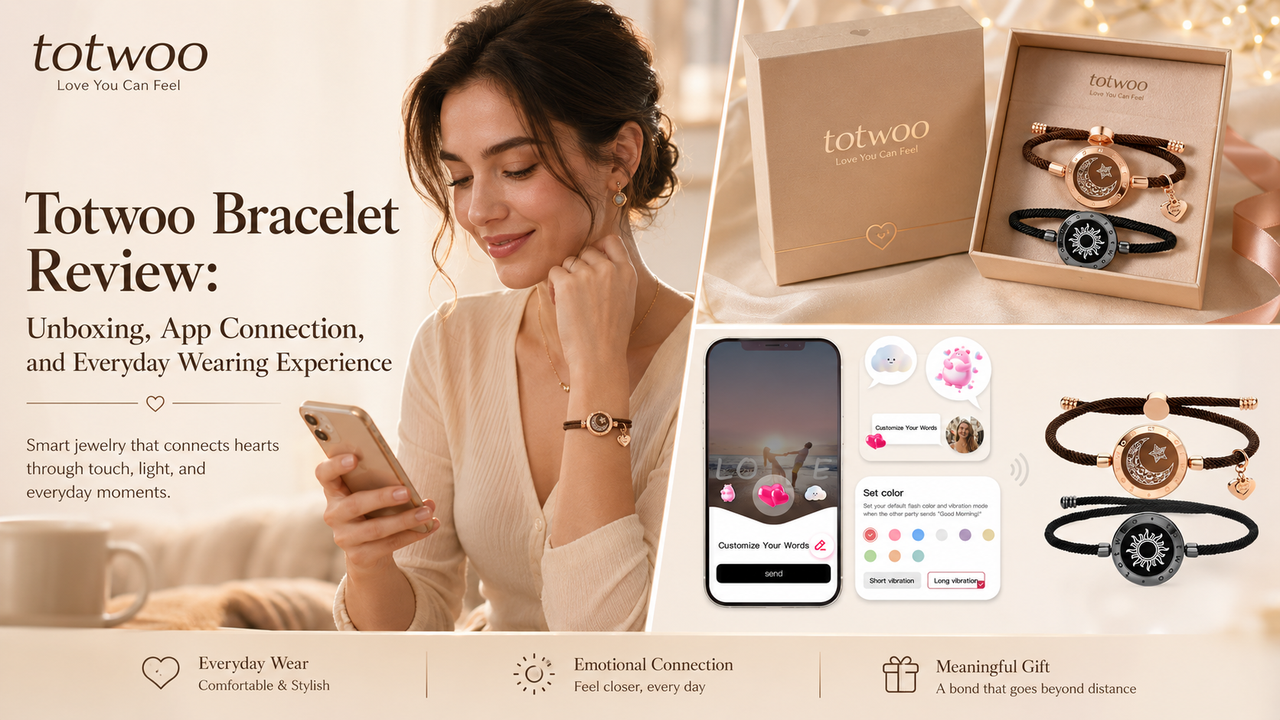
Brands like totwoo focus on this exact connection between jewelry and emotion. Instead of treating wearable technology as only fitness tracking or productivity, totwoo builds smart jewelry around love, memory, and human connection. This makes the product feel more romantic and personal than a typical tech accessory.
Why Long Distance Bracelets Are Different From Ordinary Couple Gifts
Many couple gifts are symbolic. Matching rings, necklaces, keychains, and photo frames can all be meaningful. But once the gift is given, the interaction often stops. The item reminds you of the person, but it does not actively connect you in real time.
Long distance bracelets are different because they create ongoing interaction. Every tap can become a moment. Every light signal can become a reminder. Every vibration can bring a small emotional response.
They Create Daily Rituals
Strong relationships are built through repeated small actions. Saying good morning. Checking in after work. Sending a goodnight message. Sharing small details about the day. A bracelet can become part of these rituals.
For example, one partner can send a tap before an important exam, meeting, or flight. The other can send a signal before going to sleep. Couples can create their own habits, such as one tap for “I miss you,” two taps for “call me later,” or a special signal for anniversaries and important days.
These small rituals may seem simple, but they help distance feel less empty.
They Reduce the Pressure to Always Be Online
In many long-distance relationships, couples feel pressure to reply quickly. When one person is busy, the other may feel ignored. But life is not always predictable. Work, school, family, and time zones can make instant replies difficult.
A bracelet signal offers a softer way to stay connected. It does not require a long message or full conversation. It simply says, “I’m here.” That can be especially helpful for couples who love each other but have different schedules.
Practical Tips for Maintaining a Long-Distance Relationship
A bracelet can help, but it works best when it supports healthy relationship habits. Technology should strengthen love, not replace communication. Here are some practical ways couples can maintain emotional closeness while living apart.
Build Predictable Communication Habits
Long-distance relationships become easier when both people understand each other’s rhythm. Instead of expecting constant availability, couples should agree on realistic habits. This might include a daily goodnight message, a weekly video call, or a short check-in during lunch breaks.
The goal is not to control each other’s time. The goal is to create emotional security. When both people know when and how they will connect, there is less room for anxiety.
Share Ordinary Moments, Not Just Big Updates
Many couples only talk about major events: work problems, travel plans, family news, or relationship issues. But everyday details are what make people feel close. Sharing a photo of coffee, a song, a walk, or a small joke can make your partner feel included in your daily world.
Long distance bracelets can support this by adding a physical signal to ordinary moments. You might tap your bracelet when you pass a place that reminds you of your partner or when you hear a song you both love.
Use Technology With Emotion, Not Just Convenience
Phones make communication fast, but speed is not the same as intimacy. A quick message can be useful, but a thoughtful message, voice note, video call, or touch signal often feels more meaningful.
The best approach is to mix different forms of connection. Use text for daily updates, video calls for deeper conversations, photos for shared moments, and bracelets for emotional presence.
Who Can Use Long Distance Bracelets?
Although many people think of these bracelets as couple jewelry, they can also work for other meaningful relationships.
Couples use them to stay close across cities, countries, or time zones. Parents and children can use them to maintain emotional connection during travel, school, or separation. Close friends can use them as a private way to say, “I’m thinking of you.” For anyone who wants a simple, emotional reminder of someone they love, the idea is easy to understand.
This is what makes emotional wearable technology so powerful. It is not only about distance. It is about presence.
What to Look for When Choosing Long Distance Bracelets
When choosing a bracelet for a long-distance relationship, design matters. The bracelet should look good enough to wear daily. If it feels too bulky, too childish, or too technical, one partner may stop wearing it.
Comfort is also important. A meaningful wearable should fit into daily life without becoming annoying. Battery life, app connection, signal reliability, and ease of pairing all matter as well.
Finally, emotional design matters. The bracelet should feel romantic, not just functional. The experience should make both people feel closer, not overwhelmed by complicated features.
Why Emotional Wearables Are Becoming More Popular
Modern relationships are becoming more flexible and more global. People meet online, study abroad, work remotely, travel often, and build relationships across borders. At the same time, people still want emotional closeness, reassurance, and shared rituals.
This creates a natural space for emotional wearables. They combine the beauty of jewelry with the immediacy of technology. They allow people to carry a relationship with them in a physical, visible, and interactive way.
For many couples, this is more meaningful than another app. Apps live inside the phone. A bracelet lives on the body. That difference changes how the connection feels.
Final Thoughts: Love Needs Presence, Even From a Distance
A successful long-distance relationship is not only about surviving the distance. It is about continuing to feel chosen, remembered, and emotionally present in each other’s lives. Messages and calls will always matter, but small signals can also make a big difference.
Long distance bracelets turn a simple touch into a shared emotional moment. They help couples create rituals, reduce the loneliness of distance, and carry a symbol of connection throughout the day.
For couples looking for a meaningful way to stay close, long distance bracelets offer more than jewelry. They represent a modern form of love: romantic, personal, wearable, and connected.